


Rudder Pedals Explained: Are They Worth It?

Introduction
Rudder pedals often get pushed down the priority list. I get it! They don't look very exciting or practical at first, but once you try flying with a proper set of pedals, it's hard to go back. These pedals control yaw, which is the left and right movement of the aircraft’s nose. In real-life flying, pilots are constantly making small rudder inputs to stay aligned on the runway, keep turns smooth, and handle crosswinds.
In flight simulation, having these dedicated pedals gives you more natural and precise control compared to twisting a joystick or tapping keys. Those small corrections on takeoff and landing start to feel smoother and more intentional.
Why They Matter
You can absolutely fly without rudder pedals, especially if most of your time is spent cruising at altitude in airliners. But the moment you get into general aviation, bush flying, or more hands-on flying styles, the difference becomes obvious. Takeoffs feel more controlled, landings feel more stable, and turns feel properly coordinated instead of slightly off. It also adds a level of realism that is hard to appreciate until you try. Controlling yaw with your feet while your hands focus on pitch and roll creates a more natural flow of inputs, similar to how real pilots manage an aircraft. This separation of controls makes movements feel more deliberate and coordinated rather than rushed or overcorrected.
Over time, this more authentic control layout can actually improve your overall flying technique. You become more aware of how the aircraft behaves in different phases of flight, especially during takeoff, turns, and landing. Instead of fighting the controls, you start working with them, which makes each flight feel smoother, immersive, and more rewarding.
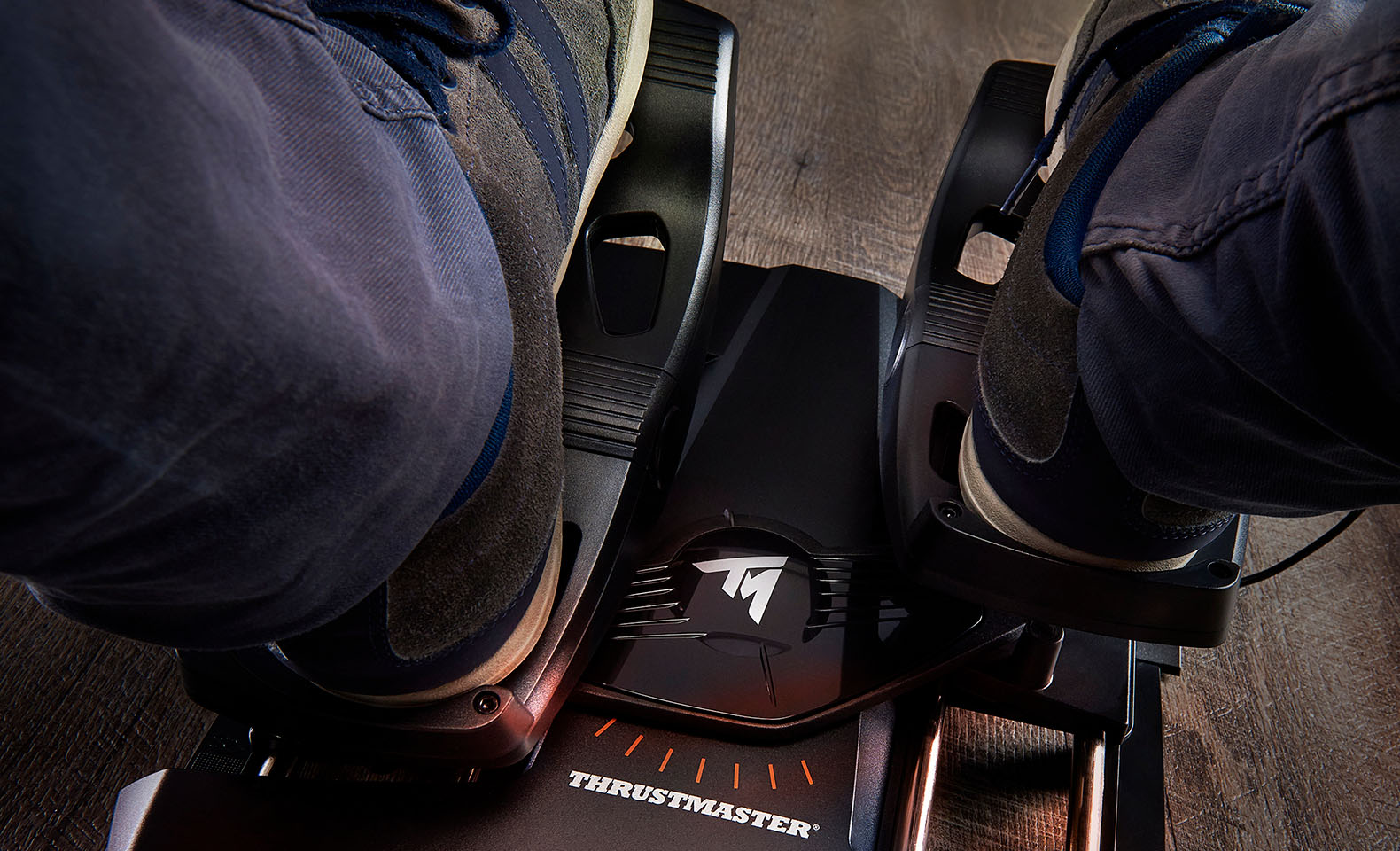
Featuring the MOZA Rudder Pedals
The new MOZA rudder pedals are a strong option for sim pilots looking to upgrade their flight cockpit. Built with a durable metal construction and smooth motion, they are designed to deliver consistent and accurate input over long sessions. Adjustable tension and pedal positioning allow users to tailor the feel to their preference and the type of aircraft they fly.
High-resolution sensors provide precise tracking of rudder movement and toe brake input, which is especially useful during taxiing and landing. With solid build quality and a focus on realism, MOZA’s pedals are aimed at sim pilots who want a more authentic and controlled flying experience. Plus, MOZA offers an optional adjustable damper for further fine-tuning.

Conclusion and Key Takeaways
Flight sim rudder pedals are a great choice for people who are passionate about making their experience feel more realistic and more hands-on. They give you better control during taxi, takeoff, landing, and coordinated turns, while also adding a deeper sense of immersion to every session.
By moving yaw control to your feet, you free up your hands and create a more natural and balanced way to fly. This not only feels closer to real-world piloting but also helps make smoother and more precise inputs across all phases of flight. For sim pilots looking to go beyond the basics and build a setup that feels truly connected to the aircraft, rudder pedals are one of the most worthwhile upgrades you can make.


