


























M6 vs M8 T-Nuts: Which Fasteners Do You Actually Need for a 40-Series Sim Rig?

If you've ever stared at a checkout page trying to decide between M6 and M8 T-nuts — or stood in front of a half-built rig wondering why a bolt won't bite — you're not alone. It's the single most common question we get about aluminum extrusion hardware, and the answer is a lot simpler than the spec sheets make it look. Here's everything you need to order the right fasteners the first time.
The short answer
For most of your rig, you want M6. It's the workhorse thread size for mounting monitors, button boxes, brackets, shifters, and accessories to 40-series extrusion. Reach for M8 at the high-load points — typically where your wheelbase and pedal deck bolt down — when the manufacturer's bracket calls for it. Plenty of builders run an all-M6 rig with zero issues; M8 is about matching specific heavy-duty mounts, not “upgrading everything.”
If that's all you came for: our Spring T-Nuts come in both M6 and M8 for the 8mm T-slot, and the Sim Racing Rig Fastener Kit pairs the bolts and T-nuts together so you're not buying them separately. Want the why behind it? Keep reading.
First, what “40 Series” and “8mm T-slot” actually mean
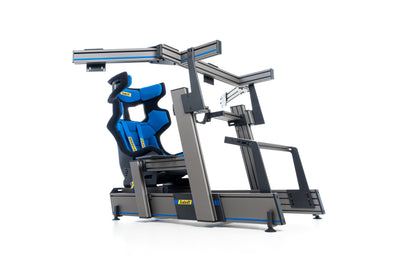
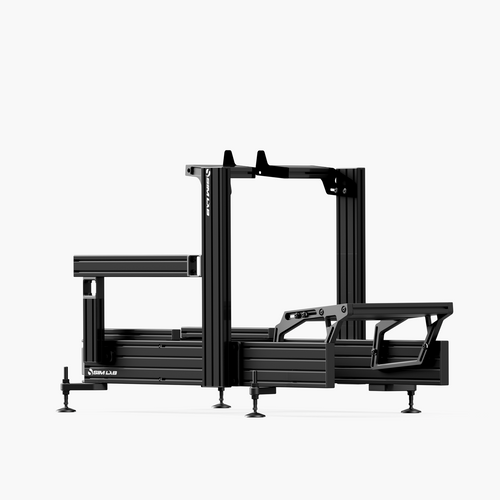
“40 Series” (also written 4040) refers to the profile size of the aluminum extrusion: 40mm × 40mm bars, the standard for the vast majority of sim racing cockpits. The “8mm T-slot” is the width of the channel running down each face of that extrusion — that slot is what your T-nuts slide into.
This matters because T-nuts are sized to the slot, not just the bolt. Both our M6 and M8 T-nuts are built for the 8mm slot found on 40-series profiles. The M6/M8 label refers only to the thread — the size of the bolt that screws into the nut. So you can mix M6 and M8 T-nuts freely in the same rig; they all fit the same channel.
M6 vs M8: the real difference
The number is the bolt's thread diameter in millimeters. M6 = 6mm, M8 = 8mm. That extra 2mm sounds trivial, but it changes a few things:
- Strength. An M8 bolt has noticeably more clamping force and shear strength than an M6. For something holding back 20+ Nm of direct-drive torque trying to twist itself loose, that headroom is welcome.
- What it bolts to. This is usually the deciding factor. Most wheelbases and pedal sets have mounting holes drilled for a specific bolt size. A base with 8mm holes wants M8; an M6 through an 8mm hole leaves it rattling around. Always check the holes on the gear you're mounting.
- Overkill has a cost. M8 hardware is bigger and pricier, and a monitor arm or button box doesn't need it. Using M8 everywhere just means heavier, costlier hardware doing an M6 job.
Which one for which job?
| Mounting… | Usually wants |
|---|---|
| Wheelbase (direct drive) | M8 — check your base's holes |
| Pedal plate / pedal deck | M8 (high load under braking) |
| Seat & seat brackets | M8 |
| Monitor / TV stand | M6 |
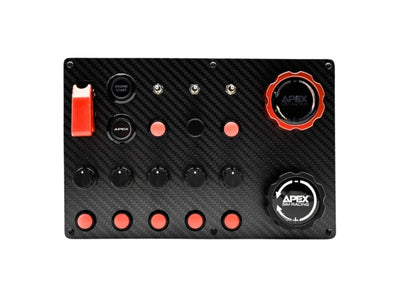
| Button box & accessory mounts | M6 |
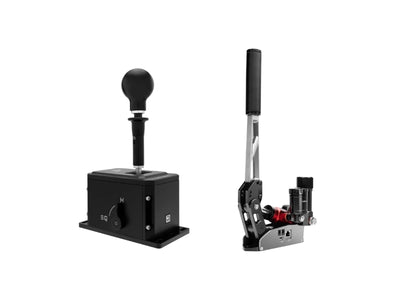
| Shifters & handbrakes | M6 (verify the bracket) |
| Brackets, clips, general builds | M6 |
When in doubt, look at the holes on the part you're attaching — the gear tells you what it needs.
Don't overlook the T-nut style: spring-loaded vs. drop-in
Thread size is only half the decision. How the T-nut sits in the slot matters just as much during the actual build.
Drop-in (roll-in) T-nuts slide into the channel freely — which means they also slide back out, or drop to the bottom of a vertical bar, the second you let go. Fine on a flat workbench, infuriating when you're holding a monitor up with one hand.
Spring-loaded T-nuts have a small ball-spring that grips the slot and holds the nut exactly where you put it. You can position one on a vertical upright, walk away, and it stays put while you line up your bracket. For sim rig assembly — where you're constantly mounting things at awkward angles — this is the difference between a 20-minute job and an hour of swearing.
Our Spring T-Nuts are the spring-loaded type for exactly this reason. They're the single most-used fastener in any extrusion build — you always end up needing more than you think.
A quick word on bolt length
Once the thread size is right, length is the last variable. Too short and you won't get enough thread engaging the nut; too long and the bolt bottoms out before it clamps. As a rule of thumb, you want the bolt long enough to pass through whatever you're mounting plus fully thread into the T-nut, with nothing left over. Our Fastener Kit lists common lengths (16mm, 20mm, 25mm) so you can match the bolt to the thickness of the bracket you're attaching.
What to grab
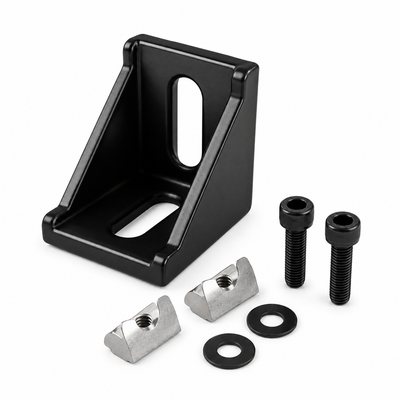
- Building or expanding a rig? The Sim Racing Rig Fastener Kit bundles Class 12.9 hex bolts with spring-loaded T-nuts, so you get matched pairs ready to go.
- Just need more T-nuts? Grab Spring T-Nuts in M6 or M8, in 10-, 20-, or 50-packs.
- Tidying up after? Once everything's bolted down, our 40-Series Cable Management Clips snap into the same slots to keep your wiring off the floor.
Get the thread size matched to your gear, go spring-loaded on the T-nuts, and the rest of the build is just turning an Allen key. Happy racing.

 https://www.apexsimracing.com


Leave a comment