


























Brake Consistency Secrets: How Your Pedals Affect Lap Times

-
1.
Introduction
- 1.1 The Science Behind Brake Consistency in Sim Racing
- 1.2 How Different Pedal Technologies Impact Your Consistency
- 1.3 Pedal Setup Secrets for Maximum Consistency
- 1.4 Physical Positioning and Ergonomics
- 1.5 Measuring and Improving Your Brake Consistency
- 1.6 Choosing the Right Pedals for Your Consistency Goals
Introduction
This week's guest blog was written by Rich Opong from Flow Racers! He discusses different types of sim racing pedals, what sets them apart, and how choosing the right hardware can unlock smoother braking, faster laps, and a more authentic racing experience.
The Science Behind Brake Consistency in Sim Racing
In the world of sim racing, there's a clear distinction between fast drivers and the legendary "aliens" who seem to extract impossible pace from every corner. While many factors contribute to this gap, one often-overlooked element stands above the rest: brake consistency. Professional sim racers and real-world drivers alike will tell you that consistent braking is the foundation of fast lap times.
The telemetry doesn't lie. When you analyze the data from top-tier drivers, you'll notice something remarkable: their brake pressure traces look almost identical lap after lap. Meanwhile, mid-pack drivers show significant variation in their braking points, pressure application, and release timing. Even a seemingly small 5% variation in brake pressure or timing can cost you multiple tenths per corner, and over a full lap, that translates to seconds lost to more consistent competitors.
What many sim racers don't realize is that their pedals might be the primary culprit behind their inconsistent braking. This article will reveal how different pedal technologies directly impact your ability to brake consistently, and more importantly, how upgrading to better pedals can unlock lap time improvements you never thought possible.
Understanding Brake Pressure vs. Stopping Distance
In real racing, brake pedal pressure directly correlates to stopping power through hydraulic systems that compress brake pads against rotors. This creates a natural, progressive feel that drivers can learn and repeat consistently. However, most entry-level sim racing pedals operate on position-based inputs rather than pressure-based systems, creating a fundamental disconnect between what your brain expects and what the pedal delivers.
The difference between linear and non-linear brake response curves is crucial here. Real cars typically exhibit non-linear brake response. Initial pedal travel provides moderate stopping power, but the final portion of pedal travel delivers exponentially more braking force. This progressive nature allows drivers to modulate brake pressure intuitively, building muscle memory that translates to consistent lap times.
Unfortunately, many sim racing setups default to linear brake curves, where 50% pedal depression always equals 50% braking force. While this might seem logical, it creates an artificial feel that makes consistent pressure application much more difficult to master.
Why Your Brain Needs Predictable Feedback
Neuroscience research shows that motor skill development relies heavily on consistent sensory feedback. When you apply brake pressure, your brain creates neural pathways connecting the physical sensation in your leg muscles to the expected deceleration response. Over time, this becomes automatic. You don't consciously think about how hard to press the brake; your muscle memory handles it.
However, inconsistent pedal feel disrupts this process. If your brake pedal's response varies due to hardware limitations, dead zones, or poor calibration, your brain never develops reliable muscle memory. This leads to hesitation, over-correction, and ultimately, inconsistent lap times.
This is particularly critical for trail braking, where drivers gradually release brake pressure while turning into corners. Trail braking requires incredibly precise pressure modulation, something that's nearly impossible without consistent pedal feedback.
How Different Pedal Technologies Impact Your Consistency
Potentiometer Pedals: The Consistency Killers
Most budget sim racing pedals use potentiometer technology, measuring pedal position rather than applied pressure. While these systems work adequately for basic racing, they create several consistency-destroying issues.
First, position-based inputs encourage "mashing" the brake pedal: pushing it to a specific physical position rather than applying consistent pressure. This approach works poorly under pressure, especially in wheel-to-wheel racing situations where precise brake modulation becomes critical.
Second, potentiometer pedals often suffer from dead zones, which are areas where pedal movement doesn't translate to brake input. These dead zones vary over time as components wear, creating an inconsistent feel that makes muscle memory development nearly impossible.

Load Cell Technology: The Game Changer
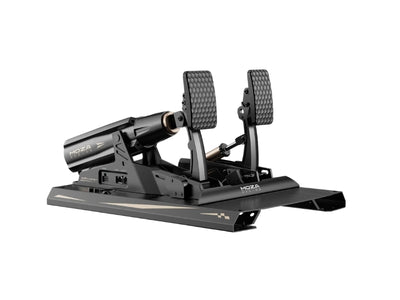
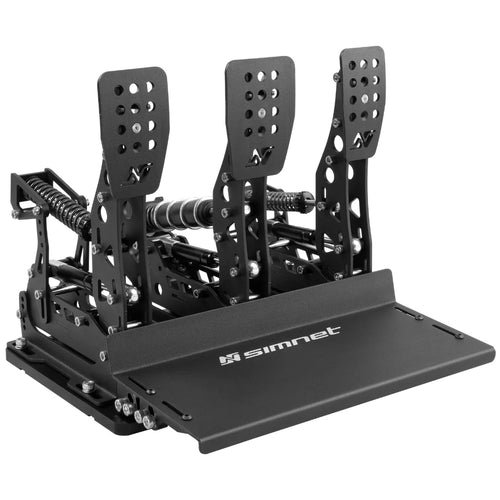
Load cell brake pedals measure applied pressure rather than pedal position, fundamentally changing how you interact with the braking system. Instead of pushing the pedal to a specific point, you apply pressure against a sensor that can detect incredibly precise force variations.
This pressure-based approach mimics real brake pedal behavior, allowing your brain to develop proper muscle memory. With a load cell system, 50 pounds of pressure always equals the same braking force, regardless of pedal position. This consistency is the foundation of repeatable lap times.
Load cell pedals also eliminate the guesswork in brake application. Instead of estimating pedal position, you develop an intuitive feel for pressure levels. This translates to more confident braking, especially when approaching corners at the limit.

Hydraulic Systems: The Near-Ultimate Consistency Tool
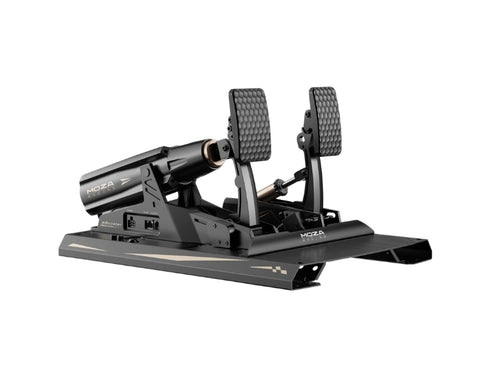
At the pinnacle of sim racing pedal technology sit hydraulic systems that use actual brake fluid to create resistance. These systems replicate real car brake feel almost perfectly, offering the progressive pressure curves and natural feedback that professional drivers rely upon.
Hydraulic pedals provide several consistency advantages. The brake fluid creates naturally progressive resistance. Light pressure yields gentle braking, while firm pressure delivers maximum stopping power. This mirrors real-world brake behavior so closely that many professional drivers use hydraulic sim setups for training.
The consistency benefits are immediately apparent in telemetry data. Drivers using hydraulic systems show remarkably similar brake pressure traces lap after lap, with variations typically under 2%, the hallmark of alien-level consistency.

Active Pedals: The Future of Brake Consistency
The newest evolution in sim racing pedal technology introduces active feedback systems that dynamically adjust pedal resistance based on real-time simulation data. Active pedals use servo motors to provide variable resistance that changes with track conditions and brake temperature – just like real racing cars.
Unlike static systems, active pedals communicate directly with your sim racing software to replicate the exact brake feel of each virtual car. This means pedal resistance automatically adjusts between a lightweight Formula car versus a heavy GT3 machine, providing unprecedented consistency training.
Active pedals also provide haptic feedback for ABS activation and brake lock-up warnings through resistance changes. However, they represent a significant investment, typically costing several times more than hydraulic systems, making them primarily suitable for professional esports drivers.

Pedal Setup Secrets for Maximum Consistency
Brake Pressure Curve Configuration
Even with quality pedals, improper software configuration can destroy consistency. The brake pressure curve determines how pedal input translates to braking force in your simulator. Finding your optimal curve requires experimentation and validation through on-track testing.
Most drivers benefit from slightly exponential brake curves that mirror real car behavior. Start with a gentle curve that provides 40% braking force at 50% pedal input, then increases more aggressively in the final portion of pedal travel. This setup promotes smooth initial brake application while preserving maximum stopping power when needed.
Testing your brake curve involves consistent lap time analysis. If you're struggling with brake lockups, your curve might be too aggressive. Conversely, if you can't achieve maximum braking performance, consider a more linear approach.
Dead Zone Elimination
Dead zones at the beginning or end of pedal travel create consistency nightmares. These areas where pedal movement doesn't register as input force your brain to compensate, disrupting natural muscle memory development.
Most sim racing software allows dead zone adjustment through calibration menus. Take time to properly calibrate your pedals, ensuring that light pressure immediately registers as brake input and maximum pressure achieves full braking force without dead spots.
For hardware-related dead zones, consider pedal modifications or upgrades. Many load cell pedal manufacturers offer different spring combinations and rubber stops that can eliminate problematic dead zones while improving pedal feel.
Physical Positioning and Ergonomics
Pedal Spacing and Angle
Proper pedal positioning directly impacts your ability to brake consistently. Pedals should be spaced to allow comfortable heel-and-toe downshifting without requiring awkward foot positioning that could affect brake pressure application.
Most professional drivers prefer brake pedals positioned slightly higher than the throttle pedal, matching real race car configurations. This height difference promotes natural foot positioning and helps prevent accidental throttle application during heavy braking.
Mounting Rigidity
Pedal flex is a hidden consistency killer that many sim racers overlook. If your pedals move or flex under hard braking, your muscle memory becomes unreliable as the physical reference points constantly change.
Proper pedal mounting requires a solid foundation that eliminates any movement under maximum braking force. This might mean upgrading your rig's pedal plate, adding bracing, or investing in a more robust mounting solution.
Measuring and Improving Your Brake Consistency
Using Telemetry to Diagnose Brake Issues
Modern sim racing platforms provide detailed telemetry data that reveals brake consistency issues with surgical precision. Key metrics include brake pressure variation, brake point consistency, and release timing accuracy.
Professional drivers typically show brake pressure variations under 3% across multiple laps. If your telemetry reveals larger variations, pedal hardware limitations might be constraining your performance. Compare your brake traces to alien replays. Consistent drivers show remarkably similar brake application patterns.
Practice Drills for Building Consistency
Developing brake consistency requires focused practice with immediate feedback. Start with brake marker discipline exercises where you commit to specific brake points and measure your ability to hit them consistently.
Pressure consistency training involves maintaining specific brake pressure levels for extended periods. Many sim racing applications include brake pressure displays that allow real-time monitoring of your inputs.
Progressive brake point optimization helps build confidence while improving consistency. Start with conservative brake points and gradually move them deeper into corners as your consistency improves.
Choosing the Right Pedals for Your Consistency Goals
Budget-Conscious Consistency Improvements
Drivers on tight budgets can still achieve significant consistency improvements through careful pedal selection and optimization. Quality load cell pedals are available under $300, offering dramatic improvements over potentiometer systems.
Focus on brands with proven load cell implementations and strong software support. Many budget-friendly options provide 80% of the consistency benefits of high-end systems at a fraction of the cost.

Mid-Range Solutions for Serious Improvement
Serious sim racers should consider professional-grade load cell systems with advanced customization options. These pedals typically offer adjustable brake pressure ranges, multiple spring configurations, and premium build quality that ensures long-term consistency.
The return on investment for mid-range pedal systems often exceeds expectations, particularly for drivers competing in organized leagues where small consistency advantages compound over full race distances.

High-End Options for Ultimate Performance
For ultimate consistency, hydraulic pedal systems represent the pinnacle of sim racing technology. While expensive, these systems provide unmatched brake feel and consistency that can justify their cost for serious competitors.
Consider hydraulic systems as long-term investments in your sim racing development. The consistency benefits compound over time as your muscle memory develops around truly realistic brake pedal behavior.

Your Path to Brake Consistency Mastery
The path to alien-level lap time consistency starts with understanding how your pedals impact your ability to brake predictably. Whether you're struggling with potentiometer pedal limitations or considering an upgrade to load cell or hydraulic systems, remember that consistency improvements compound over time.
Start by analyzing your current brake consistency through telemetry data. If you're showing more than 5% variation in brake pressure or timing, pedal upgrades could unlock significant lap time improvements. Focus on pressure-based systems that promote proper muscle memory development, and don't overlook the importance of proper setup and mounting.
The investment in quality pedals pays dividends beyond raw lap times. Improved consistency builds confidence, reduces practice time requirements, and transforms your overall approach to sim racing. Take an honest assessment of your current pedal limitations, and consider whether an upgrade might be the key to unlocking your true potential on the virtual track.
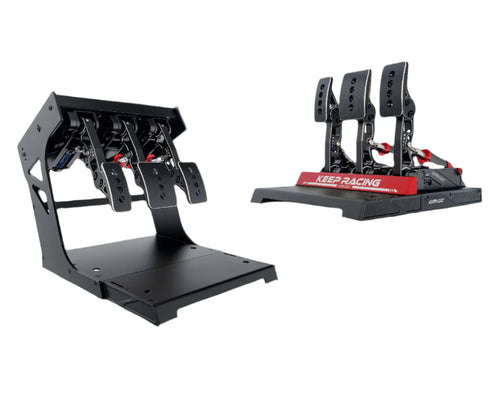
Check out our range of sim racing pedals here.


 https://flowracers.com/author/rich-opong/


Leave a comment