


How Much Torque Do You Actually Need in a Wheel Base?

Introduction
Torque categories are often the first specification sim racers notice when comparing direct drive wheel bases. Five Nm. Eight Nm. Ten Nm. Fifteen Nm. The numbers continue to climb, and so does the confusion. It also raises a common and important question: how much Nm do I really need for sim racing?
The answer is not about choosing the highest figure available; it is about understanding how torque influences force feedback quality, consistency, and long-term performance. This wheel base torque guide explains what those numbers actually represent and how to select the right range for your setup.
Understanding Torque
Torque, measured in Newton-meters, is the rotational force generated by the wheel base motor. In sim racing, the force translates into steering resistance and the detailed feedback that communicates grip, weight transfer, road texture, and vehicle balance.
Higher torque gives headroom and overall strength. When a low-torque base operates near its maximum output, it can lose detail under heavy load; this is commonly referred to as clipping. During high-speed corners or aggressive braking, subtle feedback signals may compress into a less precise sensation.
A higher-torque wheel base operating well below its limit preserves these details. The result is smoother delivery, clearer information, and more consistent feedback across different cars and track conditions.
5 to 9 Newton-Meters
Wheel bases in the five to eight Nm range are typically considered entry-level direct drive systems. They offer a significant improvement over gear-driven or belt-driven alternatives and are well-suited for desk-mounted or compact cockpit setups. For new drivers, this range provides immersive and responsive feedback without requiring a heavy-duty mounting solution. Steering resistance feels realistic, and the overall driving experience becomes more engaging and controlled.
But under sustained high loads, such as fast sweeping corners in high downforce cars, this torque range can approach its limits. As drivers progress and seek finer detail, some may begin to notice the constraints of lower headroom.
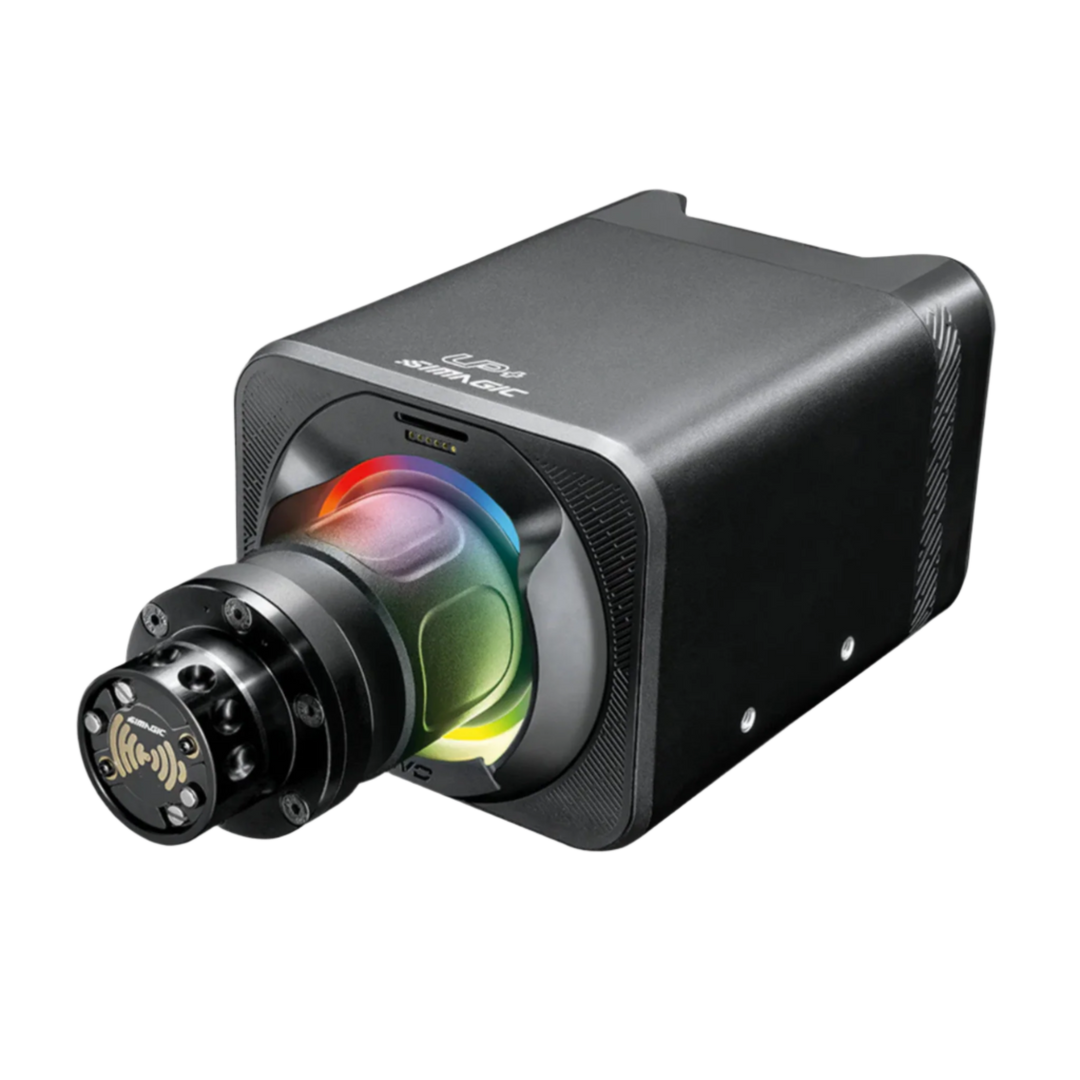
The Simagic Alpha EVO Sport is a great example of a wheel base that is grouped into this category.
9 to 12 Newton-Meters
This category represents a meaningful step forward in strength and refinement. For many serious hobbyists, this range offers the ideal balance between performance and practicality. And with additional torque available, the wheel base maintains clarity during intense racing scenarios. Weight transfer becomes easier to interpret. The onset of oversteer feels more progressive. Braking zones deliver more consistent steering resistance.
This range is often considered the sweet spot for drivers building a dedicated rig and committing long-term to the hobby. It provides noticeable gains in control and realism without requiring the structural demands of higher torque systems. The MOZA R9 V3 is a great example of this category.

13 to 15 Newton-Meters
Wheel bases classified between thirteen and fifteen Nm range are typically designed for rigid cockpit installations, particularly aluminum profile rigs capable of handling sustained force. At this level, the focus shifts from immersion to precision. The added headroom ensures that even the most aggressive steering loads remain detailed and composed. High-speed stability improves, subtle grip changes are easier to detect, and rapid corrections feel controlled rather than abrupt.
Matching that torque to the right frame matters just as much: our sim racing cockpits and rigs buying guide covers which rig types handle high-torque direct drive.
For competitive sim racers and drivers prioritizing maximum realism, this torque range delivers a highly refined and confidence-inspiring experience. Bases such as the Simucube 3 Sport are a great choice for sim racers who want a highly immersive experience.

20 Newton-Meters and Above
Systems exceeding twenty Nm are generally intended for advanced simulation environments and professional training use. These wheel bases require extremely stable mounting solutions and are beyond what most home setups require. While impressive in output, the practical advantage over the mid to high torque range is often marginal for the typical sim racer.
A high-end example of this torque category would go to the MOZA R21 Wheel Base, which aims to deliver an unmatched sim racing experience.

Choosing the Right Torque for Your Setup
Determining how much Nm you need for sim racing depends on three primary considerations: your mounting solution, your experience level, and your long-term goals. A desk-mounted configuration is best paired with five to eight Nm. A dedicated cockpit designed for consistent practice and improvement benefits significantly from ten to twelve Nm. Competitive drivers seeking maximum clarity and headroom often choose thirteen to fifteen Nm systems.
It is also worth considering upgrade patterns within the hobby. Many drivers who begin with lower torque bases eventually seek greater detail and stability. Investing in an appropriate torque range from the beginning can reduce the need for incremental upgrades later.
Conclusion
A well-matched torque range enhances both immersion and performance. By evaluating your setup and your long-term goals, you can confidently choose a system that supports your progression rather than limits it. And by understanding how much NM you truly need ensures that your investment aligns with your ambitions on track!


Dejar un comentario