


Apartment-Friendly Sim Racing Setups

Introduction
Sim racing hardware continues to advance in 2026, with stronger direct-drive wheelbases, more precise load cell pedals, and increasingly rigid cockpit systems entering the market. While these innovations elevate performance, they also introduce challenges for drivers living in apartments where space is limited, and vibration control is essential.
At Apex Sim Racing, we recognize that many racers are building their setups in shared living environments. Maximizing torque output or installing a full aluminum profile cockpit may not always be practical when floor transfer, shared walls, and storage constraints are factors.
Designing an apartment-friendly sim racing setup requires balance. By prioritizing efficient direct-drive systems, compact mounting solutions, controlled audio, and proper vibration isolation, sim racers can maintain competitive performance without creating unnecessary disruption. With a strategic approach, it is entirely possible to build a refined and space-conscious setup that supports consistent lap times while respecting the realities of apartment living.
Wheelbase Selection & Torque Control
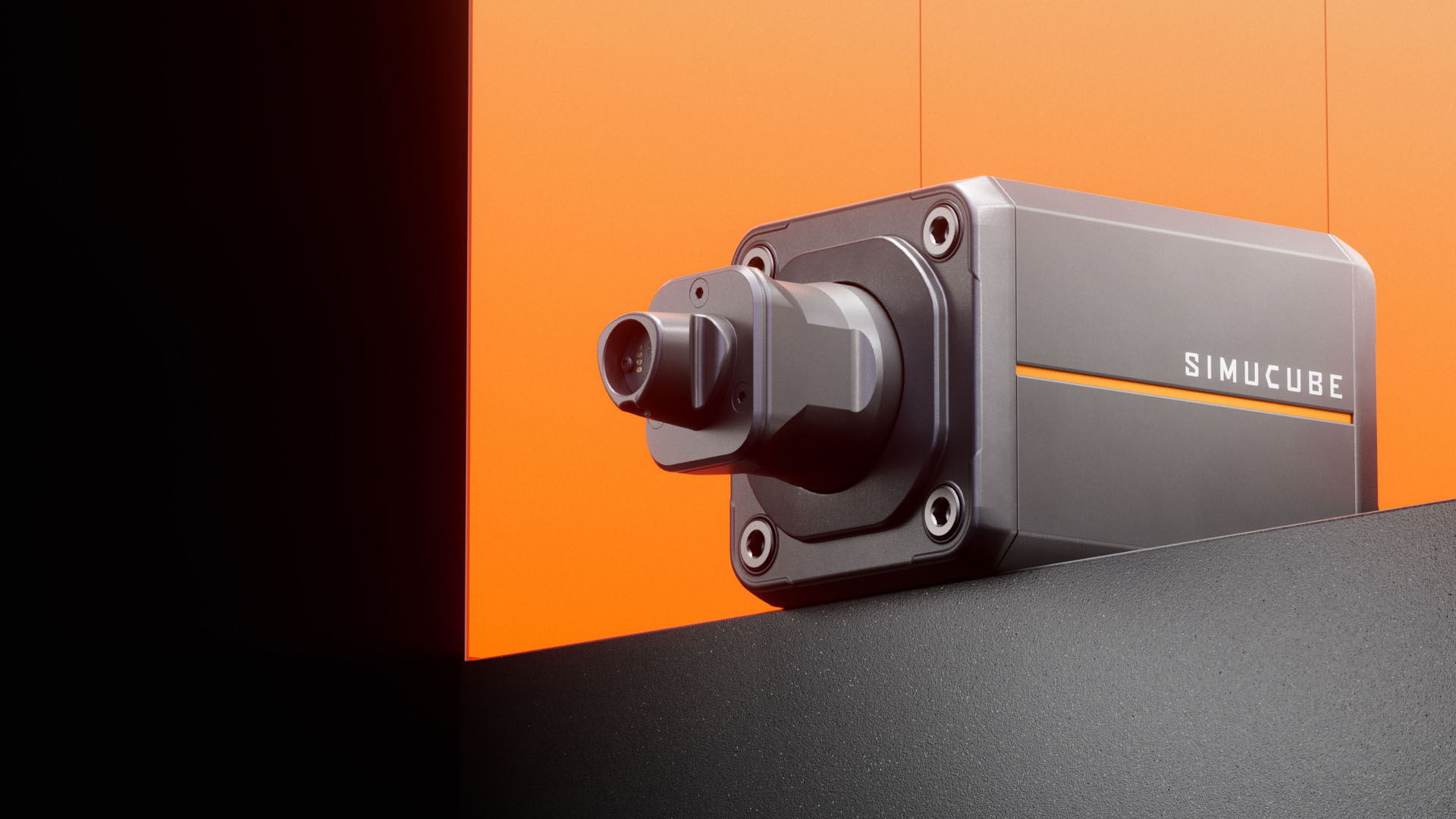
The wheelbase is the primary source of force feedback and structural vibration in any sim racing build. In apartment settings, excessive torque can transfer through desks, wheel stands, and flooring. Modern direct-drive systems provide smoother feedback with fewer moving parts than older belt-driven models. Products such as the MOZA Racing R9 and Simucube 3 Sport offer strong, detailed feedback without unnecessary mechanical noise.
For most apartment environments, operating within a moderate torque range provides excellent realism while reducing vibration transfer and noise. Higher torque settings are rarely required for consistent lap times and may increase structural resonance in smaller spaces. Selecting a smooth and efficient wheelbase is the foundation of a neighbor-friendly setup.
Space Efficiency
Large aluminum profile cockpits offer maximum rigidity, but they are often impractical in apartments due to their footprint and overall weight. A more adaptable solution involves compact or foldable wheel stands that preserve stability while allowing greater flexibility.
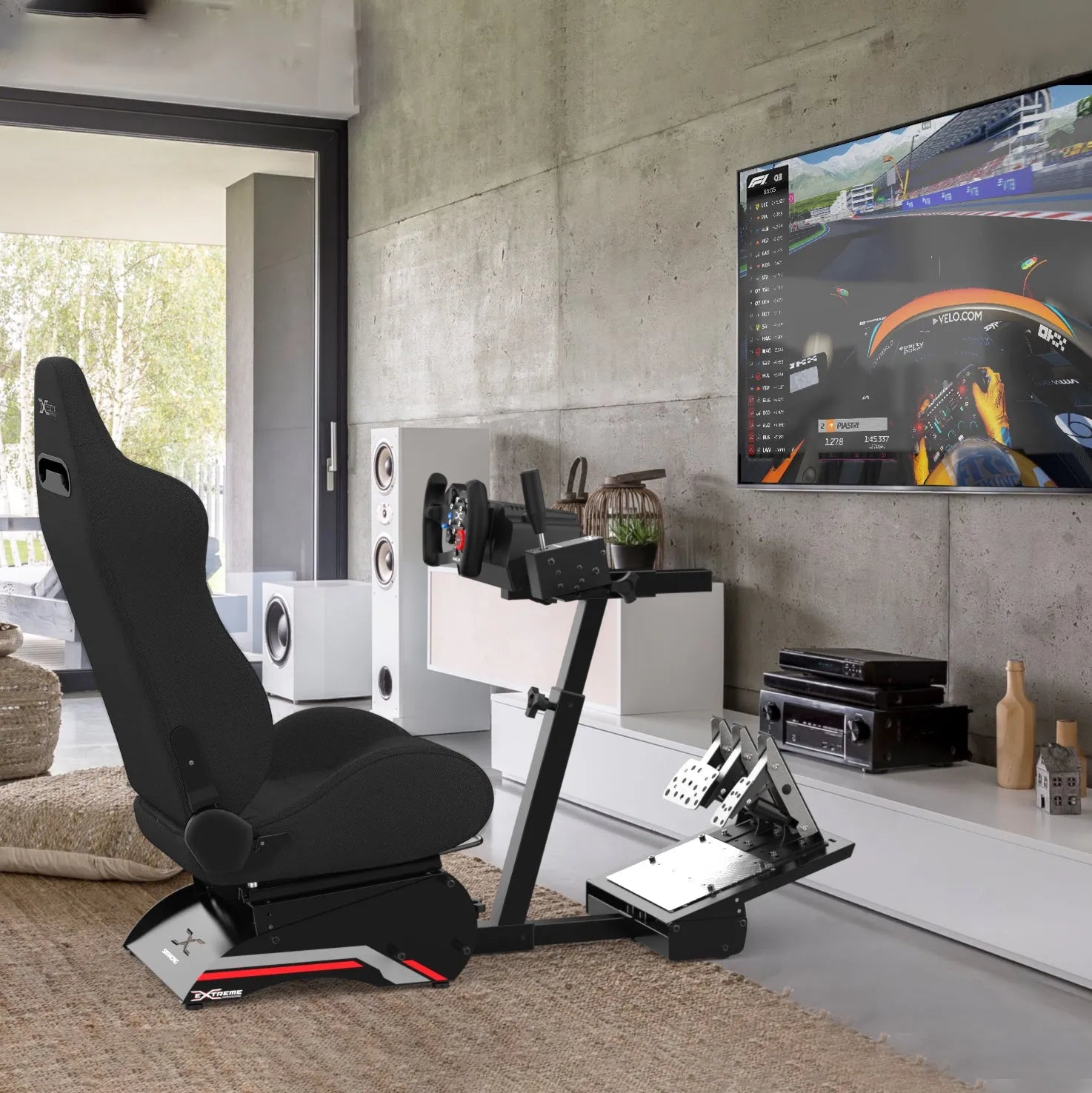
Options such as the Extreme Sim Racing Compact Cockpit 2.0 and the GT Omega Apex Stand provide a stable mounting platform while occupying significantly less space than permanent cockpits. These solutions are easier to reposition and store when not in use, which is particularly beneficial in shared living areas.
When paired with proper vibration isolation, compact mounting systems can maintain performance standards while reducing permanent pressure on flooring surfaces.
Pedal Configuration and Floor Isolation
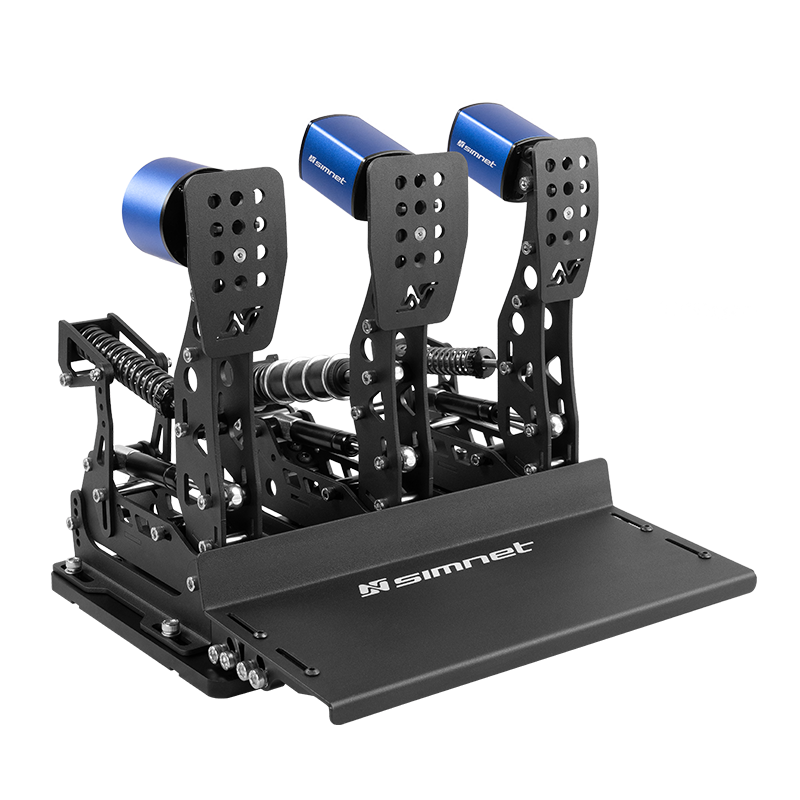
Load cell pedals are widely preferred for their braking consistency and progressive feel. However, when mounted directly on hardwood or tile flooring, pedal pressure can generate low-frequency vibration that transfers through the structure of the building. Minimizing this transfer requires thoughtful installation. Placing pedals on dense rubber or interlocking gym flooring helps absorb impact before it reaches the subfloor. Isolation pads beneath wheel stands further reduce direct structural contact. Controlled brake application also plays a role, as excessive force can amplify vibration even in well-isolated setups.
In most cases, perceived noise issues stem from vibration traveling through building materials rather than the pedal hardware itself. Proper floor isolation preserves braking precision while maintaining a quieter footprint.
Audio
Speaker systems, particularly those incorporating subwoofers, can transmit bass frequencies through shared walls and flooring. Even moderate volume levels may be more disruptive than anticipated.
Closed-back headphones provide a practical alternative that enhances immersion without external sound transfer. By isolating audio directly to the driver, headphones maintain positional awareness and clarity while eliminating one of the most common sources of neighbor disturbance.
Vibration Dampening and Structure Control
Beyond hardware selection, vibration-damping materials significantly influence overall performance in apartment environments. Interlocking gym flooring tiles, dense rubber pads, carpet underlayment, and rubber feet beneath mounting points all contribute to reducing structural resonance.
These materials function by absorbing low-frequency energy before it transfers into rigid building components. Even modest dampening measures can noticeably reduce vibration, improving both comfort and neighbor relations without compromising driving precision.
Conclusion
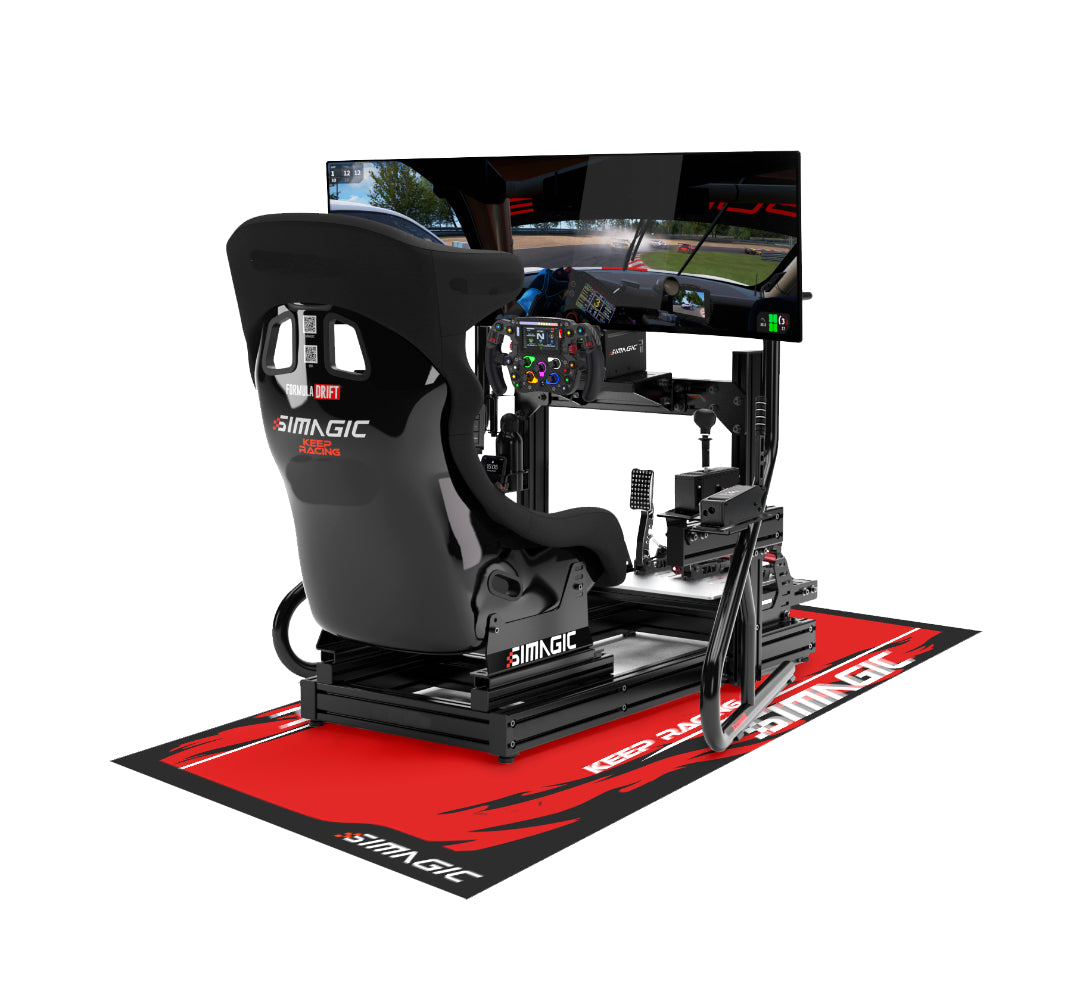
Building a sim racing cockpit in an apartment requires thoughtful planning, but it does not require sacrificing performance. By selecting efficient direct drive systems, compact mounting solutions, proper pedal isolation, and controlled audio output, drivers can maintain a high-quality racing experience while respecting their environment.
At Apex Sim Racing, we encourage drivers to approach their builds strategically. With careful equipment selection and vibration management, apartment racers can continue refining their setups and improving lap times without compromising their living space.


Leave a comment