


Simnet Pedal Haptic Guide: Linear, Rumble, and Transducer with Common Pairings

Introduction
While wheelbases and load cell pedals already provide strong physical cues, pedal haptic add-ons are increasingly becoming more popular as they add another layer of devotion to sim rig immersion. A particular brand gaining attention in this area is Simnet, which offers a lineup of pedal-focused haptic devices.
Simnet’s haptic series translates telemetry data from racing simulations into physical sensations felt directly through the pedals. By sending vibrations or movement to the driver’s feet, the haptics communicate key information. Drivers can feel traction changes, braking behavior, and surface texture. Understanding the different types of Simnet haptics and their common uses is helpful. It can help drivers build a more immersive and informative pedal setup.
An Overview of Simnet and Simagic Pedal Haptics
Simnet haptic motors are built to mount directly onto sim racing pedals. Once connected and configured, they convert simulation data into tactile feedback. Such feedback provides additional cues about car behavior and allows drivers to react more quickly to changes in grip or braking performance. Unlike audio or visual indicators, pedal haptics communicate information through physical sensation. They allow drivers to receive feedback without shifting focus away from the track. And when properly configured, these systems can improve immersion. They also help reinforce muscle memory by letting drivers feel what the car is doing.
Simnet currently offers several types of haptic devices designed for different roles within a pedal set, each focusing on a specific type of feedback, and are commonly paired with certain pedals depending on the information a driver wants to feel. We'll dive deeper into the options below.
Simnet Pedal Tactile Transducer
The Simnet Pedal Tactile Transducer is designed to deliver focused tactile feedback directly through the pedals. As a transducer, it concentrates vibration signals into the pedal assembly. The driver can feel subtle changes in vehicle behavior through their feet. This type of device helps drivers detect variations in braking pressure, acceleration behavior, and grip levels. Because the feedback is concentrated where the driver interacts with the pedals, recognition becomes easier, and even small changes in traction or braking performance become more noticeable.
Many sim racers use the transducer to enhance overall pedal feedback rather than targeting a single specific effect. It can also communicate several types of telemetry signals depending on the system configuration. This flexibility allows drivers to experiment with different feedback profiles. They can adjust until they find the setup that best supports their driving style.

Simnet Haptic Pedal Rumble Motor
The Simnet Haptic Rumble Motor focuses on producing vibration effects that simulate driving across different surfaces. These motors are designed to recreate cues such as curb impacts, road texture, and engine vibration. Typical rumble motors are often installed on throttle or clutch pedals and can communicate traction-related information without affecting pedal resistance, and when wheel spin occurs during acceleration, the rumble motor can activate. It alerts the driver that grip is being lost and allows the driver to adjust throttle input more quickly before traction is completely lost.
Another advantage of rumble feedback is its ability to simulate environmental effects. Road surfaces, bumps, and curbing can all be represented through vibration patterns. These types of cues add immersion and help drivers better understand how the car is interacting with the track surface.

Simnet Haptic Pedal Linear Motor
The Simnet Linear Motor is designed to provide more precise and controlled haptic feedback than traditional vibration motors. Instead of producing general rumble effects, the linear motor creates directional movement. It can also simulate braking forces and traction-related behavior. Because braking performance relies heavily on precise pedal control, the linear motor is commonly installed on the brake pedal. The system simulates events such as ABS activation, brake pressure changes, and tire lock-ups. When these events occur, the driver can feel the feedback through the pedal.
Such feedback is especially useful during threshold braking situations because drivers are trying to apply maximum braking force without locking the tires. By feeling these signals through the pedal, drivers can adjust braking input more precisely. They can then maintain better control when entering corners.

Common Pairings
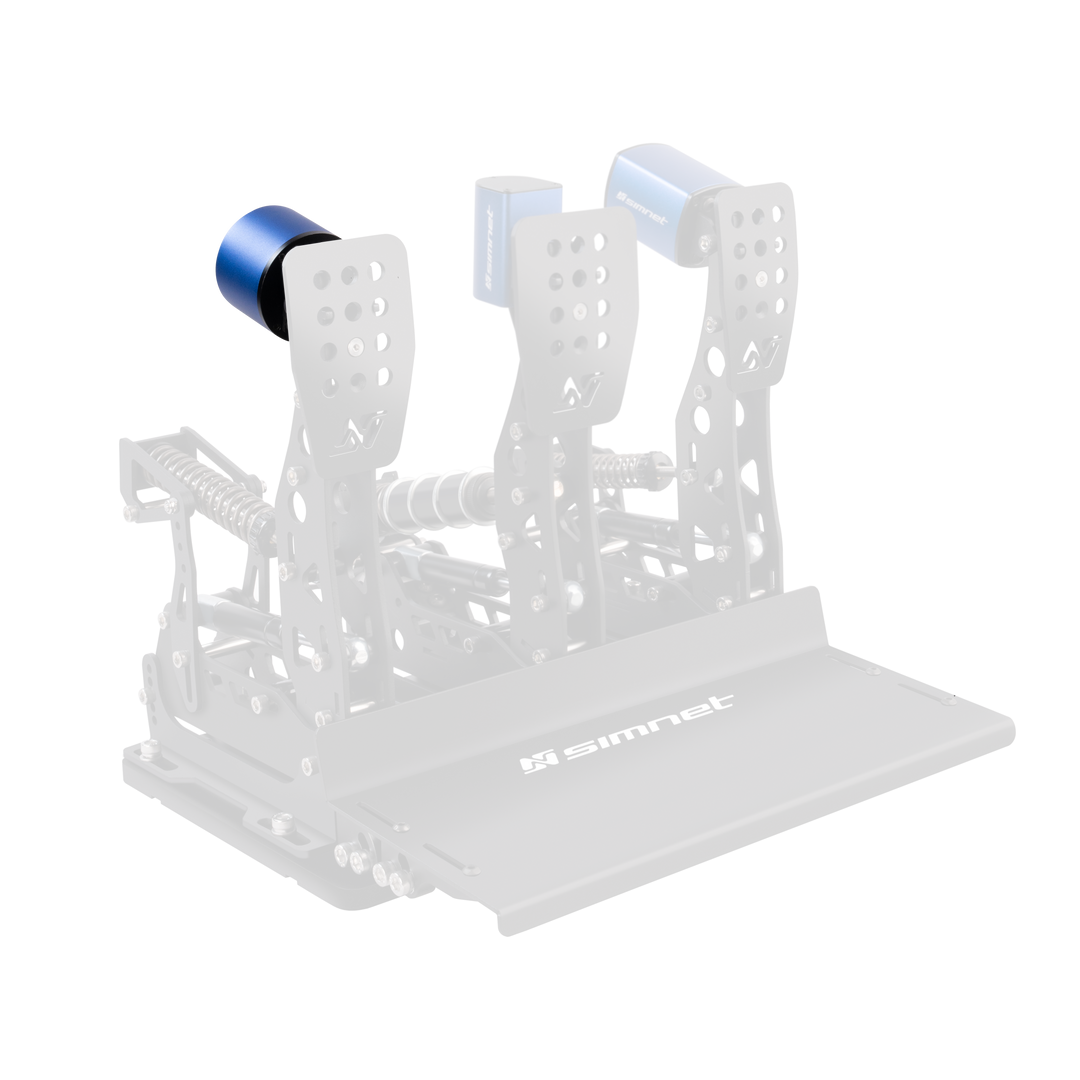
Many sim racers combine multiple types of Simnet haptics to create a layered feedback system across their pedals. Each motor type is usually assigned to a pedal based on the type of feedback it produces most effectively; a very common configuration places the linear motor on the brake pedal. It allows the driver to feel ABS activity, brake pressure changes, and potential tire lock-ups directly through the braking input.
Rumble motors are often placed on the throttle and clutch pedals. On the throttle pedal, rumble feedback can represent wheel spin or traction loss during acceleration. On the clutch pedal, vibration can simulate engine behavior or drivetrain interaction when launching the car or shifting gears.
The pedal transducer can be used as an additional feedback source depending on the driver’s setup. Some racers use it to enhance overall pedal vibration effects while others configure it to highlight specific telemetry events.
Overall, using different haptics across multiple pedals allows drivers to feel several types of information simultaneously. Braking feedback, traction loss, and surface texture can all be communicated through separate signals and create a more immersive driving experience.
Pedal Compatibility and Requirements
Simnet haptics are designed to work with a variety of pedal systems. However, exact setup requirements can vary depending on the hardware. Drivers using Simagic P1000 or P2000 pedals can usually integrate Simnet haptics relatively easily. These pedals already support external accessories and upgrades. Installation usually involves mounting the haptic motor to the pedal assembly. Then it is connected to the appropriate control hardware.
For drivers using third-party pedal sets, installation may require additional mounting brackets depending on the pedal design. Many sim racers use custom mounting solutions or adapters to attach haptic motors securely to their pedals.
Some Simnet haptic devices also require additional hardware to operate correctly. The linear motor, for example, requires the Simnet power supply. It also needs either the Simnet control box or a compatible Simnet pedal set. Once installed and connected, the system is configured through compatible software. This software translates simulation telemetry into haptic signals.
Conclusion
Simnet haptics give sim racers a new way to feel what the car is doing beyond just the wheel. By sending vibration and motion directly through the pedals, these devices can communicate important cues like braking activity, traction loss, and track surface detail. With the linear motor typically used on the brake pedal and rumble motors commonly installed on throttle or clutch pedals, drivers can build a setup that provides meaningful feedback exactly where it is needed.
When combined, these haptics help create a more immersive and informative driving experience while improving control and consistency on track. For drivers looking to upgrade their pedal feedback, Simnet haptics are available through Apex Sim Racing along with compatible mounting hardware and accessories.


